
If you’re on a private well, color and odor changes are usually the first thing that tips you off that something’s different. Most of the time, what you’re seeing or smelling isn’t dangerous. It’s iron, manganese, or naturally occurring bacteria doing exactly what they do in groundwater. But not always, and the only way to tell the difference is to know what you’re actually dealing with.
This guide walks through the real causes of yellow, orange, or brown well water, and separately, the real causes of smelly well water, because they’re often not the same problem, even though a lot of well-water content online treats them like they are.
This guide is written for private, individually-owned wells: the kind where you own the well cap, casing, and pump, and you’re the one responsible for testing and treatment. If your water comes from a utility that happens to source from groundwater wells, your water is treated and monitored by that utility, and troubleshooting a color or odor change starts with contacting them, not inspecting a well you don’t own.
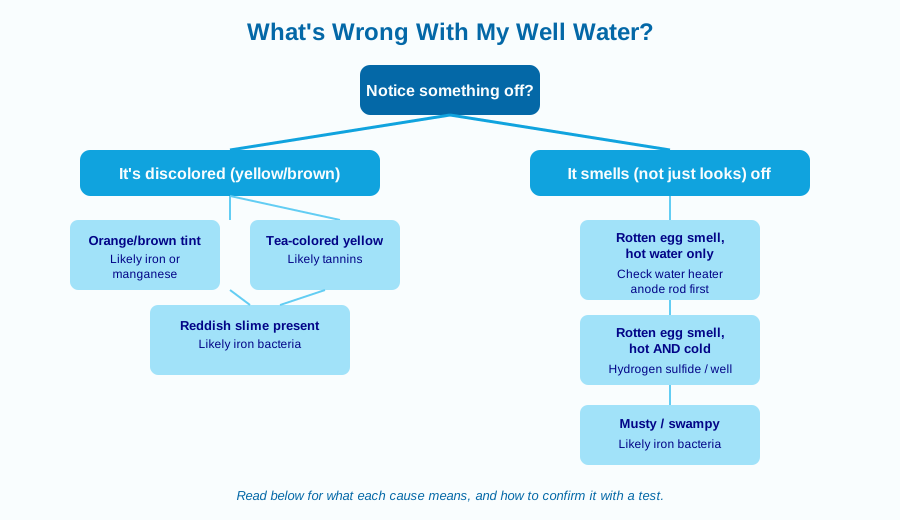
Why Well Water Turns Yellow, Orange, or Brown
Iron and manganese
Iron and manganese are naturally occurring minerals in groundwater across most of the country. On their own, dissolved in water, they’re colorless. The color shows up once they’re exposed to air and oxidize: iron turns reddish-orange, manganese turns black-to-brown. That’s the mechanism, oxidation, not “low levels” of anything.
These aren’t unregulated or ignored contaminants. They have official EPA Secondary Maximum Contaminant Levels: 0.3 mg/L for iron and 0.05 mg/L for manganese. “Secondary” means these standards are about taste, staining, and appearance rather than being legally enforced like primary health-based limits. Worth knowing, though: manganese also has an EPA Health Advisory Level of 0.3 mg/L specifically for infants under 12 months, since manganese exposure at that level is a genuine developmental concern for that age group. That’s a different threshold than the aesthetic one, and worth paying attention to if there’s a baby in the house.
Iron bacteria
This is a separate issue from iron itself. Iron bacteria are naturally occurring organisms that feed on the iron and manganese dissolved in your water, and their waste products create the reddish-brown slime or sludge many well owners find in toilet tanks or on well components. Iron bacteria aren’t typically considered a direct health threat, but they can clog well screens and plumbing, and the conditions that support them can also support other organisms you’d rather not have around. If you’re seeing slimy buildup, not just discoloration, that’s the signal.
Tannins
Tannins come from decaying leaves, roots, and other organic plant matter breaking down in the soil above your aquifer. As groundwater moves through that organic layer, it picks up tannins the same way steeping tea picks up color from tea leaves, which is exactly why tannin-affected water often looks like weak tea, with a yellow-to-brown tint. Tannins aren’t a health risk, but they can affect taste and appearance enough that people want them addressed.
Corroded plumbing, water heaters, and well disturbances
A few more mundane causes round this out:
- Corroded or aging pipes (especially older galvanized plumbing) can shed rust into your water as it flows.
- A rusting water heater can affect only your hot water, leaving cold water clear.
- Well pump or plumbing disturbances, like a recently serviced pump, a new pressure tank, or work done on your own well system, can stir up sediment temporarily.
If the color traces back to corroded pipes or a rusting water heater rather than the well itself, that’s a plumbing repair, not a water treatment fix. A licensed plumber can evaluate whether it’s isolated to a fixture, the water heater, or the home’s plumbing more broadly, and advise on repair versus replacement.
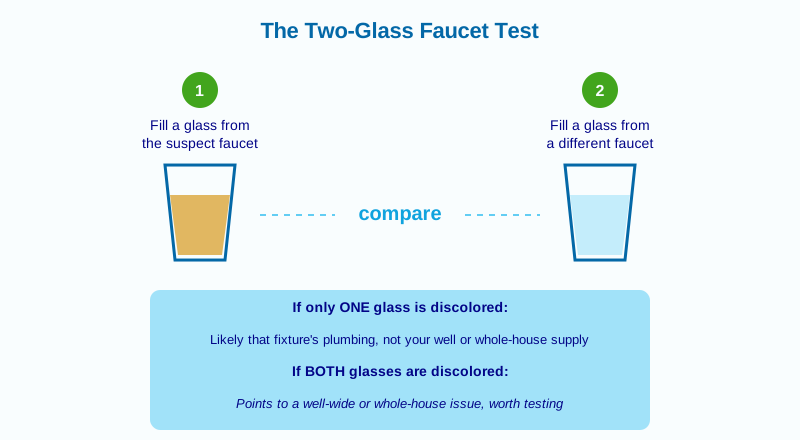
How to narrow it down yourself: Run the hot and cold taps separately. If only hot water is discolored, look at the water heater, not the well. Then compare a glass from the suspect faucet against a glass from another faucet in the house. If only one fixture is affected, it’s likely that fixture’s plumbing, not your whole water supply.

Why Well Water Smells
This is the half most “yellow water” articles skip entirely, but for a lot of well owners, smell is the more noticeable problem.
Hydrogen sulfide and sulfur bacteria (the “rotten egg” smell)
The classic well water odor complaint is hydrogen sulfide gas, which smells like rotten eggs. It has two common sources:
- Naturally occurring hydrogen sulfide in the groundwater itself, especially in wells drawing from certain rock or soil formations.
- Sulfur-reducing bacteria living in the well or plumbing, which produce hydrogen sulfide as a byproduct.
Rule out the drain first
Before you diagnose anything about your well, water heater, or plumbing, make sure the smell is actually coming from the water and not the drain. A drain with organic buildup (soap scum, hair, food residue) can develop its own bacterial growth that doesn’t smell until running water stirs it up, which makes it very easy to mistake for a water problem it isn’t.
To check: fill a glass with water, then walk away from the sink before smelling it. If the water in the glass smells normal once you’re away from the drain, the smell is coming from the drain, not your water supply. It’s also worth smelling water from a different fixture entirely. Compare a kitchen tap to a bathroom tap; if only one location smells off, that points to that specific drain or fixture rather than your well or whole-house water.
The water heater giveaway
If the drain isn’t the source and the smell is strong from hot water but faint or absent from cold, look at your water heater before assuming it’s the well itself. Magnesium anode rods (used to protect the tank from corrosion) can react with sulfate in the water to produce hydrogen sulfide gas, concentrated right there in the tank. This is a genuinely common, fixable cause, sometimes as simple as swapping the anode rod or having the tank chlorinated.
We’ll cover exactly how to chlorinate a water heater for this in a dedicated guide. It’s one of the most common questions I get asked as a water professional, and it deserves its own walkthrough rather than a quick mention here.
Musty, swampy, or “earthy” smells
This pattern usually points back to iron bacteria or other organic bacterial growth in the well or plumbing, rather than hydrogen sulfide specifically. If you’re also seeing the reddish slime mentioned above, that’s a good confirming sign. Beyond the aquifer itself, contamination can also enter through the well’s physical structure, most commonly a damaged, loose, or missing well cap letting surface water and debris in. This is a genuine concern, not just a discoloration issue, since surface water can carry bacteria the aquifer wouldn’t otherwise expose you to. We cover this in more depth, including what a properly sealed well cap should look like, in our guide on well water turning cloudy after rain.
Is It Safe?
This depends entirely on what’s causing it, which is why testing matters more than guessing from color or smell alone.
- Iron, manganese, and tannins are aesthetic issues under EPA’s secondary standards, not something to panic about, though genuinely unpleasant to live with and worth addressing for taste, staining, and plumbing longevity.
- Iron bacteria and sulfur bacteria are usually more of a nuisance and maintenance issue than a direct health threat, but the conditions that let them thrive can also allow other bacteria in, which is why a water test, not just a visual assessment, is the right next step.
- Any sudden change, especially alongside a smell you haven’t noticed before, is worth treating as a reason to test, not just wait and see.
How to Test Your Well Water
Testing beats guessing, but sample collection instructions vary depending on what you’re testing for. A coliform bacteria sample is handled differently than an iron/manganese sample, for instance. Rather than follow generic steps here, get your sample containers and specific collection instructions directly from the accredited lab that will be analyzing your water, or from your county health department. They’ll tell you exactly how to collect, store, and transport the sample for the specific tests you’re running, which matters more for getting a valid result than any general instructions could.
For a well owner troubleshooting color or smell, a reasonable starting panel is iron, manganese, pH, hardness, coliform bacteria, and nitrate, but confirm with your lab what they recommend for your specific symptoms.
Matching the Fix to the Cause
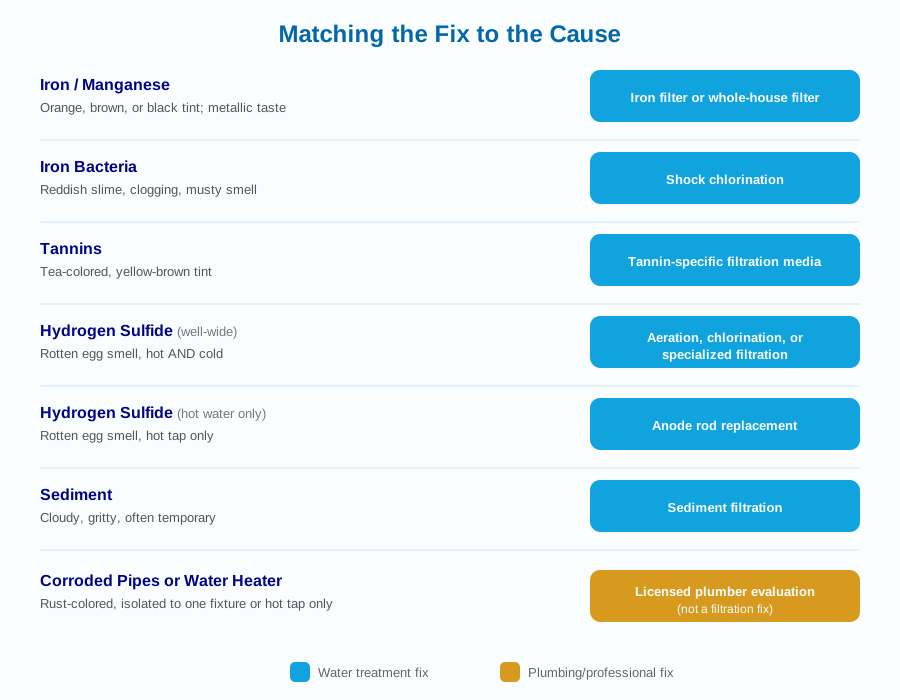
When This Is Normal, and When to Call a Professional
A gradual iron or tannin tint that’s been stable for a while, with test results confirming what it is, is something plenty of well owners simply choose to filter and move on from. It’s not an emergency. What’s worth calling a professional over: a sudden change you haven’t seen before, any positive test for coliform bacteria or nitrate, a smell that shows up alongside a color change you can’t explain, or discoloration you’ve traced to corroded pipes or a water heater rather than the well itself (that last one calls for a licensed plumber, not a filtration decision). When in doubt, a state-certified lab test settles it faster than guessing.
A note on scope: this article covers diagnosing color and odor issues. Two related topics, chlorinating a well to address iron bacteria, and whole-house/well chlorination for a bacteriological contamination result, are common enough questions that they’ll get their own dedicated guides rather than a condensed version here.
FAQs
Why did my water suddenly turn yellow? Sudden changes usually trace back to something specific: nearby utility work, a plumbing issue, or a shift in well conditions after heavy rain. If it’s genuinely sudden and you haven’t seen it before, it’s worth a water test rather than assuming it’ll pass. (If the timing lines up with a recent storm, see our guide on well water turning cloudy after rain for a closer look at that specific pattern.)
Is it safe to shower in yellow well water? Generally yes, for iron- or tannin-related discoloration; these aren’t skin hazards. If you’re noticing dry skin or scalp irritation with prolonged exposure to high-mineral water, that’s a comfort issue worth addressing, not a safety one.
Why does only my hot water smell bad? First, confirm it’s not the drain (see the glass test above). If it’s genuinely the hot water itself, this is the classic sign of a water heater anode rod reaction, not a well-wide problem. Start there before assuming your whole water supply is affected.
Why is my well water yellow after rain? Heavy rain can cause surface water to mix into shallow groundwater, especially if your well cap isn’t sealed properly. That temporarily raises turbidity and organic content. The same process is behind well water that turns cloudy after rain, so if you’re seeing both, they likely share a cause. If it clears up within a few days, that’s consistent with this cause. If it persists, it’s worth a test.